
Why a Booking Dashboard Is the Most Underrated Asset in a Travel Agency’s Technology Stack
By dcs plus team on Mar 25, 2026, 12:07:10 PM
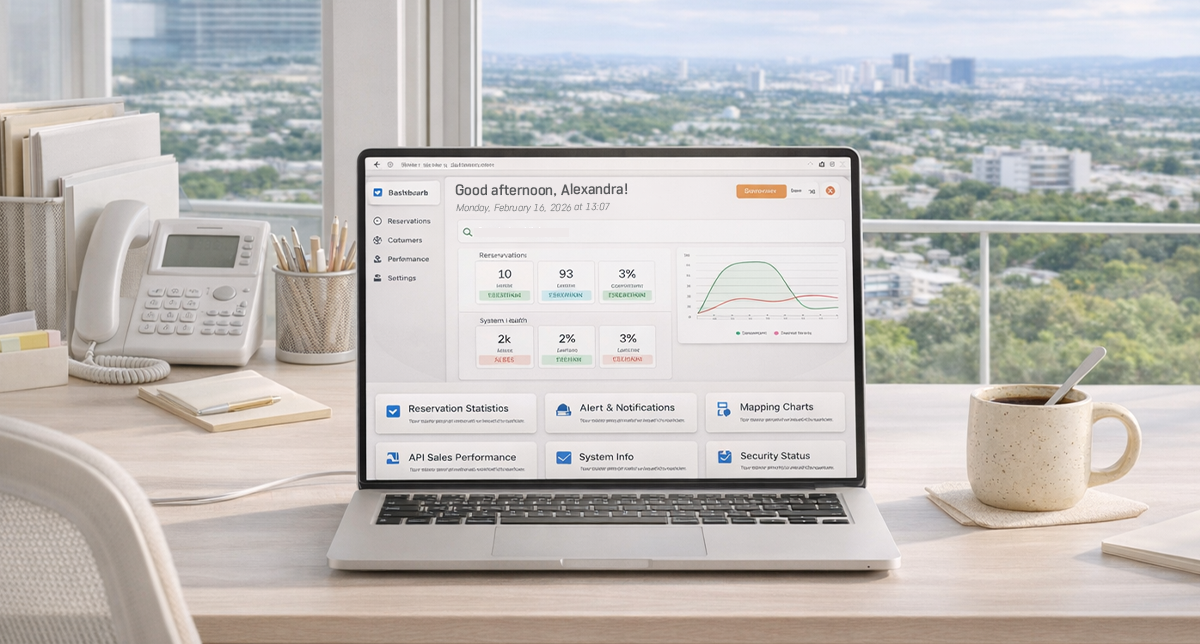
In today’s travel ecosystem - where agencies manage multiple suppliers, API connections, resellers, and automated booking flows - visibility is no longer optional. It’s operational infrastructure.
A travel booking engine can process thousands of searches per minute. But can you immediately answer:
-
Why did bookings drop yesterday?
-
Why are cancellations higher this week?
-
Why are searches increasing but conversions are not?
-
Why is one reseller underperforming?
-
Why are bookings failing silently?
Most travel agencies can’t.
Not because they lack data - but because they lack visibility. And that’s where a booking dashboard becomes critical.
A booking engine handles bookings. A dashboard explains performance.
Modern travel agencies operate inside complex ecosystems:
-
Multiple suppliers
-
API distribution
-
Reseller networks
-
Dynamic pricing
-
Real-time availability
When something shifts, the impact shows up in bookings, but the cause is usually somewhere else. And, a structured dashboard connects the dots.
Why a Dashboard Truly Matters
Because performance issues rarely announce themselves.
They hide in:
-
Failed booking attempts
-
High look-to-book ratios
-
Unread operational alerts
-
API slowdowns
-
Mapping gaps
By the time revenue drops are visible in monthly reports, the issue has already been active for days, sometimes weeks.
A centralized dashboard changes that dynamic. It shifts agencies from reacting to issues to anticipating them.
What Travel Agencies Should Actually Monitor
If a dashboard only shows revenue totals, it gives you the result - not the explanation.
Revenue might look stable while cancellations are rising. Searches might increase while conversions quietly decline.
Without connecting the underlying signals, numbers alone can create a false sense of stability.
That’s why effective monitoring must go beyond totals and connect the drivers behind them.
➡️Get instant overview of your business performance with:
-
Reservations & cancellations (24h / 7d / 30d)
-
Booking evolution trends
-
Failed booking attempts and operational alerts
-
Unread reseller messages and pending actions
This reveals behavioral shifts to help you spot trends early and react faster.
➡️API Distribution Performance
For agencies distributing inventory via API, visibility must go deeper:
-
Searches, bookings & conversion rates
-
Look-to-book ratios
-
Performance split by Hotels API & Flights API
-
Real-time telemetry status
API activity is not just traffic. It’s a measurable performance channel.
➡️Stay ahead of operational risks with alerts:
-
Failed booking attempts by provider
-
Communication and supplier errors
-
Pending issues requiring attention
This gives you immediate visibility into operational friction so you can resolve issues before they escalate.
➡️Security visibility, simplified:
A booking ecosystem is also a technical infrastructure. Monitoring should include:
-
Login activity and active sessions
-
Authentication methods in use
-
Security level indicators and recommendations
This ensures your booking environment remains protected, monitored, and transparent at all times.
➡️Gain real-time insight into system health with:
Access real-time technical insights, including:
-
Server and system status
-
Resource usage (CPU, memory, disk)
-
Cache and service health
This helps you maintain platform stability and detect technical pressure before it affects bookings.
➡️Monitor content matching and supplier coverage with:
-
Country, city, hotel, and location matching
-
Coverage percentages per provider
-
Quick actions for rebuilds and mapping fixes
This improves content accuracy and strengthens the relevance and reliability of your booking results.
What a Good Dashboard Ultimately Brings
Clarity. And clarity leads to:
-
Faster decisions
-
Less troubleshooting
-
Better API optimization
-
Reduced revenue leakage
-
Stronger cross-team coordination
Most importantly, it shifts agencies from reacting to numbers to understanding performance.
The Bigger Perspective
As booking ecosystems grow, complexity increases.
More suppliers. More APIs. More automation. More data.
As booking ecosystems grow in complexity, visibility becomes increasingly critical. Without structured monitoring, expansion can reduce clarity instead of improving performance. A booking dashboard moves beyond reporting - it becomes a control layer that helps agencies protect revenue, optimize operations, and sustain profitability in a dynamic distribution environment.
- travel technology (61)
- Travel Industry (49)
- travel agency (31)
- travel erp (31)
- travel trends (28)
- travel booking system (23)
- TINA (21)
- travel company (19)
- Tour Operator (18)
- Product updates (17)
- Travel Management Company (17)
- AIDA (15)
- Business Travel (15)
- TBS (15)
- dcs plus news (14)
- tour operator solution (14)
- travel website (14)
- travel erp system (13)
- Corporate Travel (12)
- Mobile App (12)
- Travel App (12)
- mid back office solution (12)
- trends (12)
- Industry Events (11)
- Mobile Technology (11)
- TMC (11)
- travel agents (11)
- erp (10)
- erp system (10)
- Tour Operators (9)
- Travel booking engines (9)
- dcs plus (9)
- online travel agency (9)
- travel agent (9)
- Business Traveler (8)
- Mobile Bookings (8)
- travel (8)
- travel agencies (8)
- 2017 (7)
- Mobile Travel (7)
- travel business (7)
- travel software (7)
- Digital Technology (6)
- Insider (6)
- Millennials (6)
- Online booking systems (6)
- Travel Management Companies (6)
- process automation (6)
- travel companies (6)
- Big Data (5)
- Partners interviews (5)
- Tour Operator Software (5)
- corporate self booking tool (5)
- customer retention (5)
- travel agency technology (5)
- Booking engines (4)
- CSBT (4)
- Mobile Device (4)
- Mobile travel apps (4)
- OTAs (4)
- Static databases (4)
- Tour Companies (4)
- Travel Policy (4)
- Travel booking systems (4)
- Travel suppliers (4)
- back office automation (4)
- millennial travelers (4)
- online travel (4)
- responsive travel website (4)
- technology (4)
- travel website conversion (4)
- 2016 (3)
- AI in travel (3)
- Content mapping (3)
- Databases (3)
- Demographics (3)
- Food and Adventure Tourism (3)
- Mobile Apps (3)
- Travel Distribution Channels (3)
- Travel Management Software (3)
- Travel customers (3)
- Travel history (3)
- anniversary (3)
- automated processes (3)
- content matching (3)
- global travel industry (3)
- social media (3)
- travel agency workflow (3)
- travel back office (3)
- travel marketing (3)
- travel process automation (3)
- Advanced Booking Systems (2)
- B2B Travel Resellers (2)
- Bleisure (2)
- Branding (2)
- Business Process Automation (2)
- Business Travelers (2)
- Customer engagement (2)
- Financial Reporting (2)
- Food Tourism (2)
- Inbound Marketing (2)
- Infographic (2)
- Leisure Travel (2)
- Saas (2)
- Templates (2)
- Travel Costs (2)
- Travel bookings (2)
- Travel start-up (2)
- Travel website abandonment (2)
- WTM 2016 (2)
- abandoned travel bookings (2)
- engagement marketing (2)
- internet booking engine (2)
- millennial traveler (2)
- new travel company (2)
- office (2)
- online reputation management (2)
- online travel reviews (2)
- reporting (2)
- software (2)
- start-up tips (2)
- travel agency management (2)
- travel agency website (2)
- travel experience (2)
- travel mobile app (2)
- travel packages (2)
- travel reservation system (2)
- travel system (2)
- travelers (2)
- web-based travel erp (2)
- 2020 (1)
- 360 Customer View (1)
- Advanced Accommodation Contract Management (1)
- Adventure travelers (1)
- Apps (1)
- B2B Reseller (1)
- B2B Resellers (1)
- B2C (1)
- BI Reporting (1)
- Budget traveler (1)
- Cancellations (1)
- Chat (1)
- Chinese millennial (1)
- Cloud (1)
- Cognitive computing (1)
- Comparison shopping (1)
- Conference (1)
- Contact matching (1)
- Content (1)
- Cruise (1)
- Culinary traveler (1)
- Customer relations (1)
- Digital Innovation (1)
- Digital Natives (1)
- Documents (1)
- Emerging market travelers (1)
- Emerging markets (1)
- Errors (1)
- Experimental travel (1)
- Financial Dashboard (1)
- Import rates (1)
- Instant messaging (1)
- Integrate with Accounting Software (1)
- Internet (1)
- Luxury traveler (1)
- Mobile Transaction (1)
- Mobile payments (1)
- NDC distribution (1)
- Operational Reporting (1)
- Reseller networks (1)
- Resellers (1)
- Response (1)
- Subagents Network (1)
- TINA Academy (1)
- TTE (1)
- Travel Reseller Network (1)
- Travel Revenue Management (1)
- Travel booking problems (1)
- Travel finance reporting (1)
- Travel stats (1)
- WTM (1)
- abandonment (1)
- accomodations (1)
- advanced reporting (1)
- airline direct connect technology (1)
- ancillary services (1)
- cloud computing (1)
- collection (1)
- collection challenges (1)
- common data model (1)
- conversion rates (1)
- corporate mobile app (1)
- cost control (1)
- credo ventures capital invests in dcs plus (1)
- customer reviews (1)
- data analysis (1)
- dcs plus credo investment (1)
- dcs plus credo ventures (1)
- deloitte technology fast 500 EMEA (1)
- digital transformation (1)
- e-invoicing KSA (1)
- email marketing (1)
- email marketing for OTAs (1)
- erp e-invoicing (1)
- lost travel bookings (1)
- modern travel agencies (1)
- networks (1)
- new features (1)
- offers (1)
- online customer review (1)
- online reputation (1)
- online travel agencies (1)
- risk management (1)
- sales (1)
- senior travelers (1)
- shopping baskets (1)
- shopping carts (1)
- social network (1)
- standardized processes (1)
- static content (1)
- travel SaaS (1)
- travel account services (1)
- travel agency customers (1)
- travel agency profitability (1)
- travel analytics (1)
- travel blog (1)
- travel planning (1)
- travel reviews (1)
- travel shopping carts (1)
- travel software for agencies (1)
- travel software system (1)
- travel technology europe (1)
- travlist smart mobile app (1)
- trend (1)
- trusted adviser (1)
- trusted advisor (1)
- upsell functionality (1)
- vouchers (1)
- website traffic (1)
- zatca (1)
Subscribe by email
You May Also Like
These Related Stories

Protecting your Travel Agency’s Online Reputation

Is Travel Agency Workflow Stepping on Sales Potential?

No Comments Yet
Let us know what you think